E-commerce & webshopsTimber trade & shopPublic siteReal case study
Houthandel Jan Sok
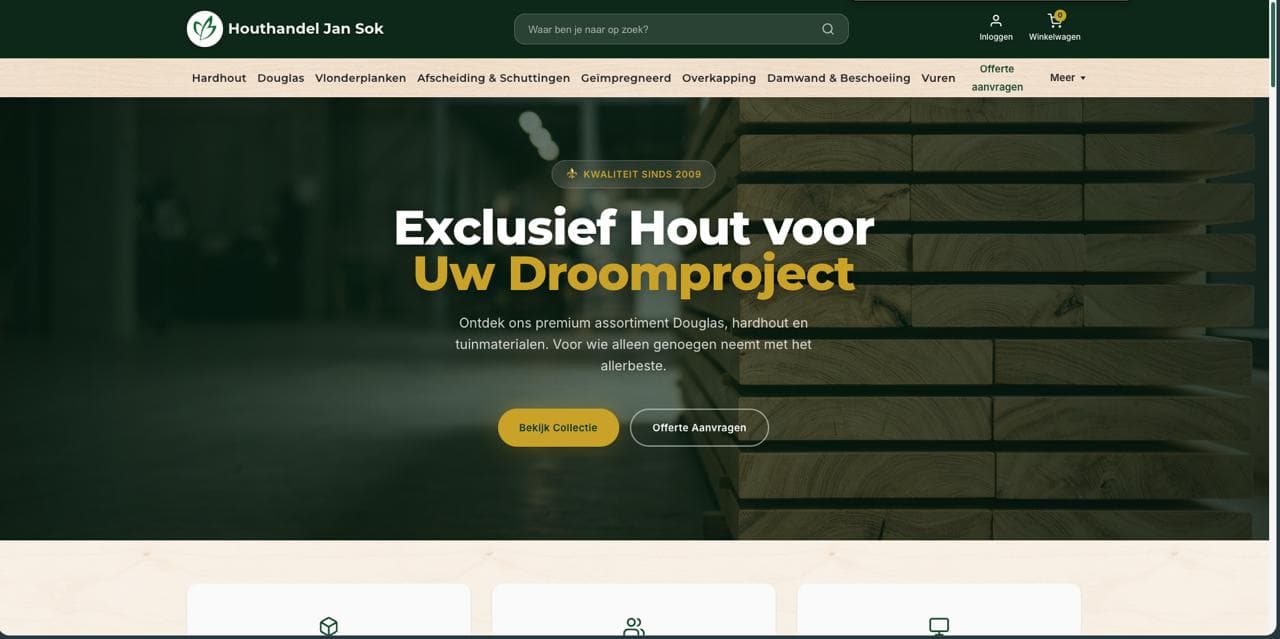
The old setup was WordPress with a generic site builder: a basic layout without a strong professional structure and limited room for a serious online shop. That was fully replaced with custom design and a tailor-made webshop. Orders no longer sit inside a rigid template - they run through an order-management layer aligned with how Jan Sok works, from enquiry to fulfilment.
Client / domainHouthandel Jan SokTimber trade, Drenthe and Overijssel
SetupCustom webshopOwn order management
ReachDrenthe and OverijsselOnline sales alongside the yard
StatusPublic siteOpen it yourself
The trajectory
The challenge vs. the solution
What went wrong first, and what now lives in the software or on the site.
Before
The challenge
The site had to earn trust with consumers and contractors alike, and support serious online timber sales - including sizing and logistics.
- WordPress with a visual builder: limited brand expression and layout freedom.
- No robust e-commerce foundation for catalogue and checkout at scale.
- Order status and follow-up were not transparent for customers and staff.
- Little room for a clear product hierarchy (species, lengths, use cases).
Result
The solution
Bespoke front end and shop: product structure and order management aligned with how Jan Sok actually works, with a calm, professional look.
- Custom web design without templates - brand, hierarchy and overview first.
- Tailor-made shop logic suited to timber assortments and customer types.
- Dedicated order management with clear status, delivery and next actions.
- Scalable structure: ready to grow without hitting template walls again.
Build-up
Key deliverables
Webshop with product structure aligned to the catalogue
Order management and traceability from enquiry to delivery
Scalable site structure instead of page-builder blocks
More about this case
More about this case
Context
Jan Sok supplies timber and building materials to a mix of retail and trade customers. The old site felt like a builder project with limited shop logic: complex product choices and lead times were hard to explain.
Approach & outcome
We restarted with information architecture and checkout: which steps customers see, how custom sizes and stock are communicated, and how orders stay traceable internally. Live at houthandeljansok.nl.
Want something like this?
The approach in this case study is a standard service. See what it includes and what it costs.
Next step
Discuss a similar engagement
Discuss what a comparable project would look like for your situation - scope, approach and expected results.
No-obligation consultationReply within one working dayMeeting in Wanneperveen or online